How Event Timers Improve Speaker Confidence and Audience Experience
Behind every well-run event is careful time management. Audiences may not always notice it, but speakers and organizers feel its impact constantly. Event timers help maintain balance, reduce stress, and ensure that every session delivers value.
BLOG
12/26/20252 min read
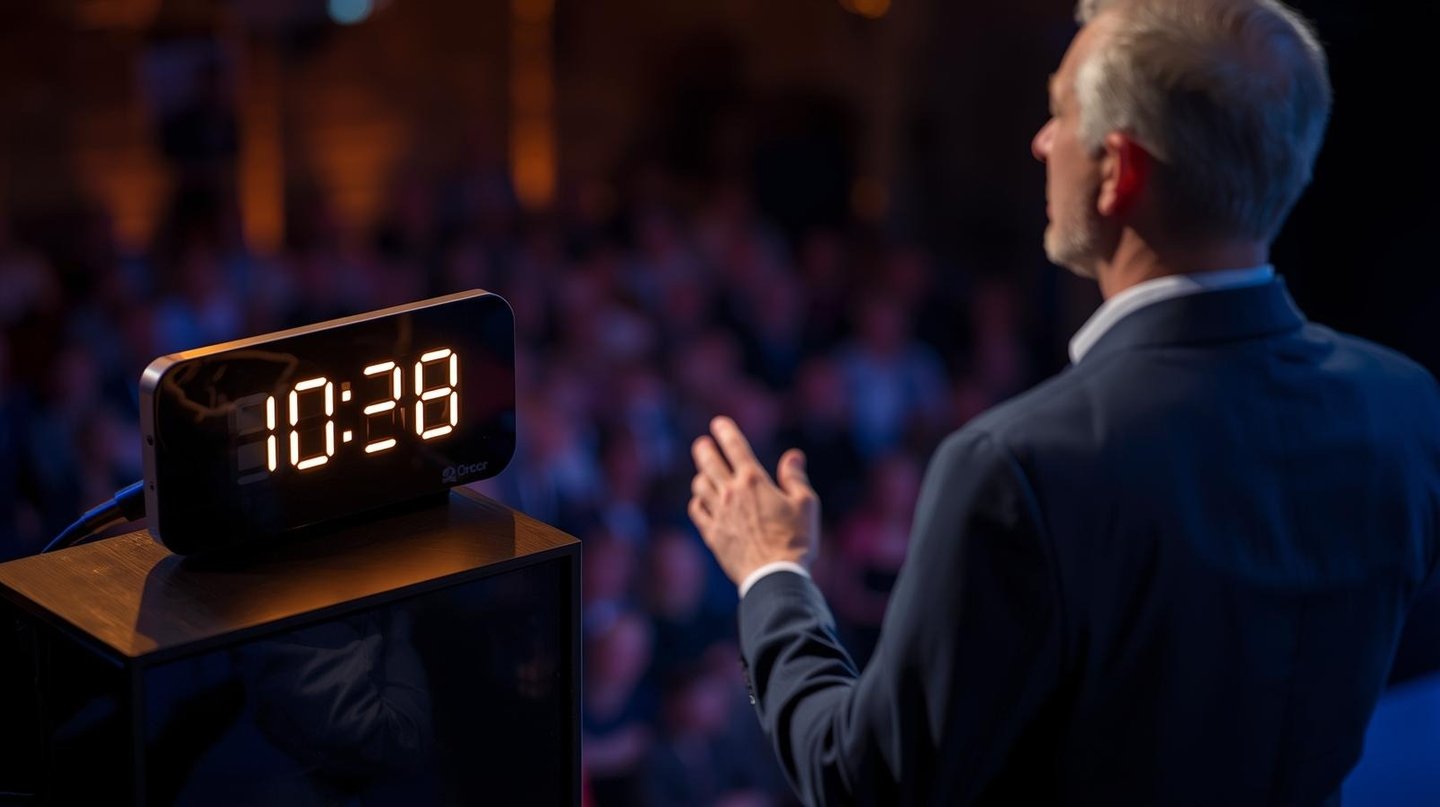
Behind every well-run event is careful time management. Audiences may not always notice it, but speakers and organizers feel its impact constantly. Event timers help maintain balance, reduce stress, and ensure that every session delivers value.
This article explains how timers are used across webinars, conferences, and live events, and why they are essential for modern event planning.
Why Timing Matters More Than Ever
Today’s events often involve multiple speakers, global audiences, and tight schedules. Even small delays can cascade into larger problems later in the agenda.
To avoid this, many hosts use a webinar timer to maintain structure and keep sessions aligned with the planned schedule.
Understanding Event and Presentation Timers
An event timer provides a clear reference point for managing session length. It may count upward or downward depending on the event format.
A timer for presentation helps presenters focus on content delivery without constantly checking the clock.
Countdown Timers for Speakers and Presenters
A countdown timer for speakers shows exactly how much time remains, allowing speakers to adjust their pace naturally.
Likewise, a countdown timer for presenters is useful in meetings and conferences where multiple presenters must stay within their allotted time.
Reducing Stress for Speakers
Public speaking can be stressful, especially when time limits are strict. A visible timer for speakers removes uncertainty and allows speakers to concentrate on delivering their message.
A timer for presenters also helps during rehearsals, enabling speakers to practice staying within time.
Timers in Webinars and Online Events
Virtual events benefit greatly from precise timing. A countdown timer for webinar sessions helps hosts manage handovers, discussions, and audience interaction smoothly.
This creates a better experience for attendees who may be joining from busy schedules.
Conference and Stage Timing Systems
In large venues, coordination is critical. A conference timer helps ensure sessions across multiple rooms remain synchronized.
A stage timer is often used backstage or near podiums to guide speakers discreetly. In some event documentation, this may be referred to as a stagetimer.
Countdown Timers for Events and Sessions
A countdown timer for events is commonly used before sessions begin, helping audiences settle in and reducing late starts.
During programs, a countdown timer for sessions helps maintain balance across the agenda and protects later sessions from overruns.
Managing Stage Flow Effectively
Smooth transitions are key to professional events. A countdown timer for stage helps stage managers cue lighting, sound, and speaker transitions accurately.
This coordination improves both audience perception and speaker experience.
Best Practices for Event Timing
Successful events follow a few simple timing principles:
Communicate time limits clearly
Make timers easy for speakers to see
Practice with timers during rehearsals
Build buffer time into the schedule
Good timing supports creativity rather than restricting it.
Common Challenges With Timers
Challenges often arise when:
Speakers are unfamiliar with timers
Time limits are unrealistic
Timers are poorly positioned
Last-minute agenda changes occur
Addressing these issues early helps events run smoothly.
Final Thoughts
Timers are an essential part of modern event management. They support speakers, protect schedules, and enhance audience experience across webinars, conferences, and live sessions.
By understanding how timers are used and applying best practices, organizers can deliver events that feel seamless, professional, and respectful of everyone’s time.
MassCalendar.in
Send Bulk & Mass Calendar Invites Instantly
CONTACT
Meetings
+44 (0) 203 916 5117
© 2025. All rights reserved.
Help?